The Rooms We Carry: In Conversation with Jennifer Agusiobo
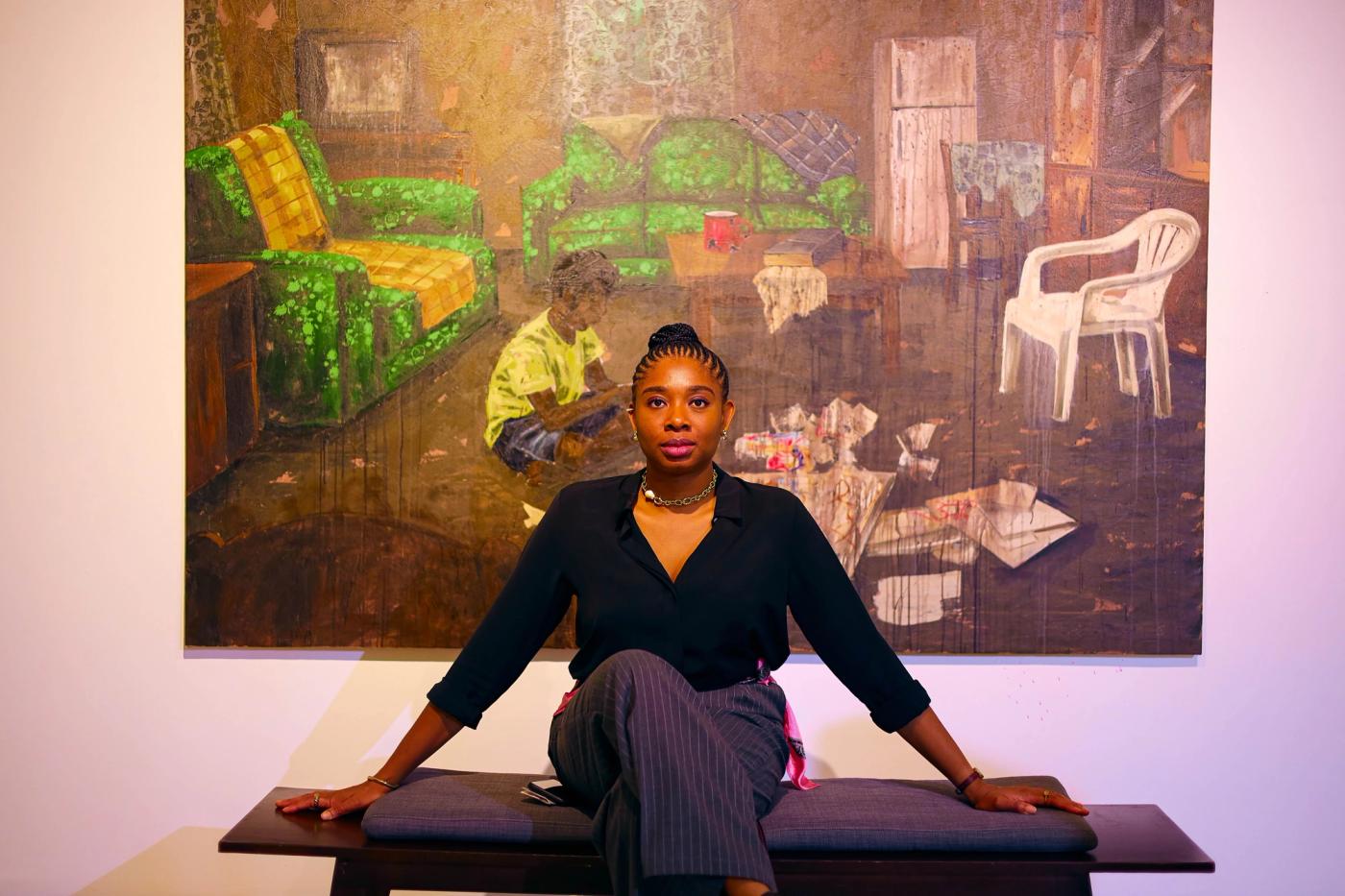
Jennifer Agusiobo’s curatorial process begins with a conversation.
Rejoice Anodo
Chief Editor
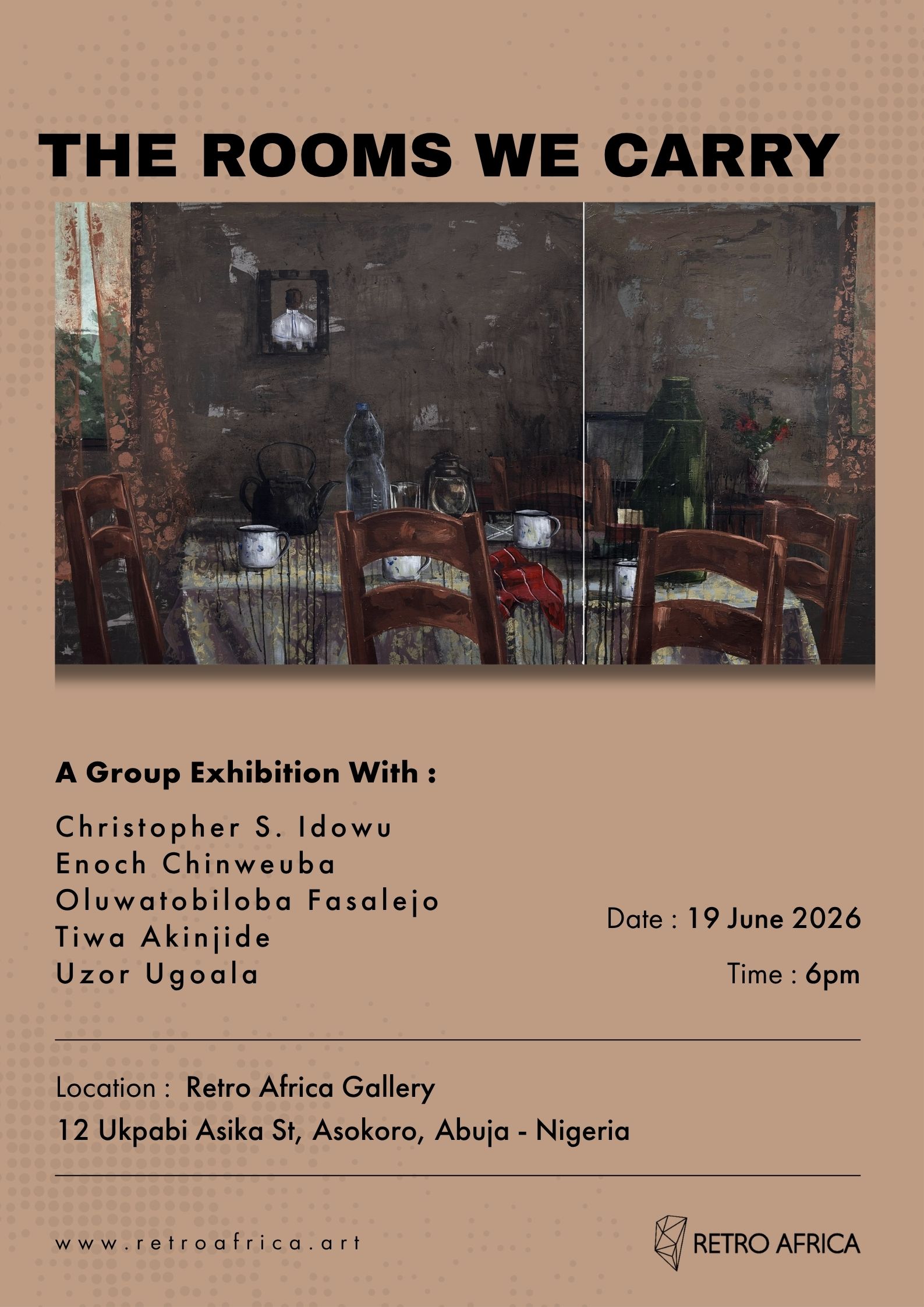
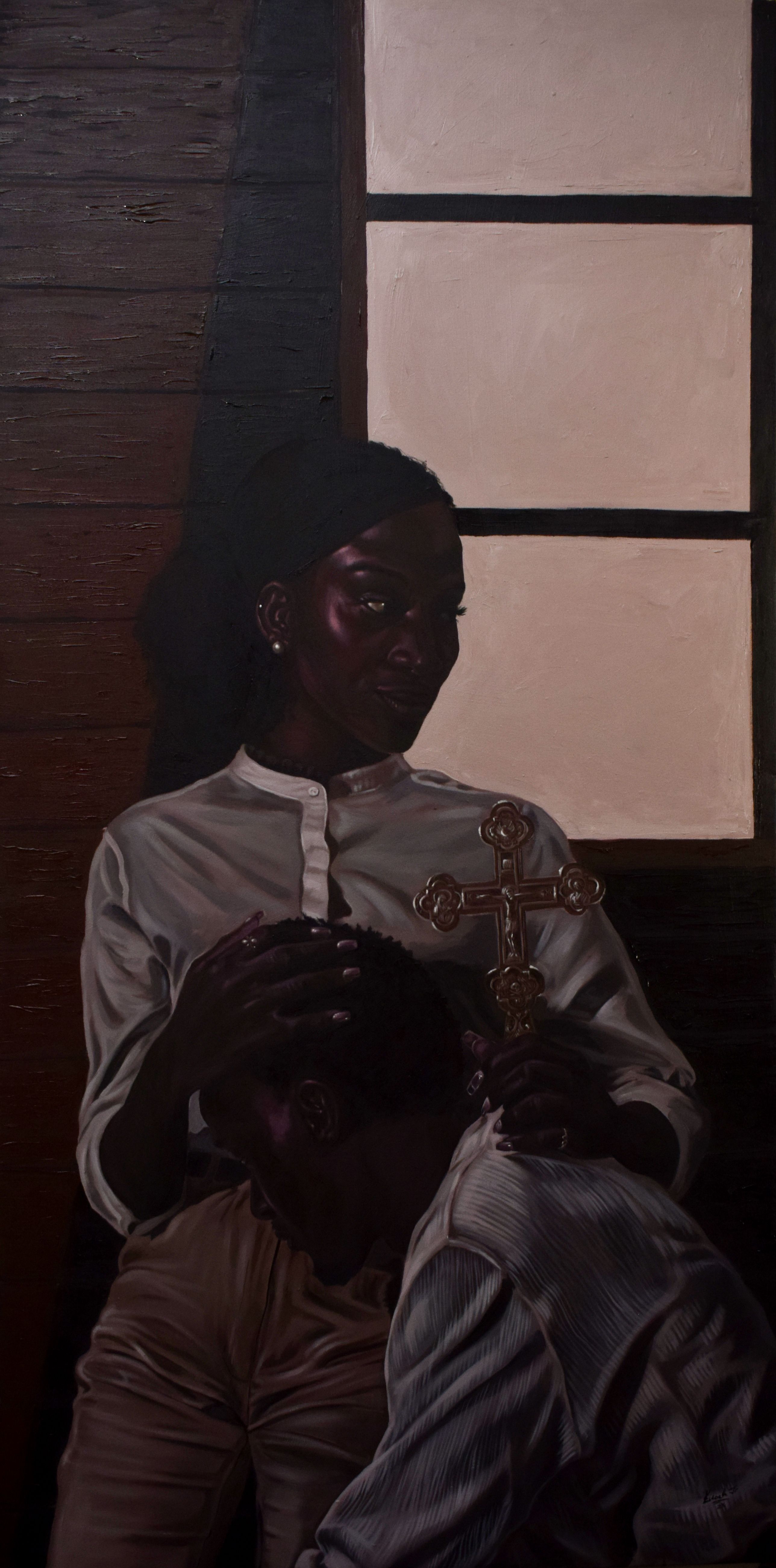
The Rooms We Carry is a group exhibition featuring works by Enoch Chinweuba, Oluwatobiloba Fasalejo, Christopher Samuel Idowu, Tiwa Akinjide, and Uzor Ugoala. Across paintings and sculptures, these artists gather fragments of longing, faith, memory, masculinity, grief, hope, freedom, and becoming, asking what it means to live with the invisible spaces that shape us long after a moment has passed.
— a snippet from The Rooms We Carry curatorial statement.
Rejoice Anodo: Before we discuss your latest curatorial project, it would be good to talk about your curatorial slant, the ideas and themes that fuel your work, with reference to your previous projects. Why did you become a curator, and how has that purpose helped with your work so far?
Jennifer Agusiobo: I did not necessarily begin with the intention of becoming a curator. My practice has always been rooted more broadly in creating experiences. Having worked across different creative areas, I gradually found myself positioned at the intersection of artists, galleries, and audiences.
A significant part of my work has involved artist liaison: spending time with artists, understanding their ideas, what inspires their work, and what they want people to encounter when they experience it. I have always found that process important because before thinking about how a work should be presented, I want to understand the mind behind the work.
This naturally began to shape my approach to curation. The question that often interests me first is “How does this work speak in a room?” When a painting, sculpture or installation enters a particular space, under a particular theme, how does it speak to the person encountering it? Does it call them in? Does it make them confront something? Does it create something they want to resist, or something they need to feel?
For me, curation is about holding space for the artist's intent while inviting audiences into a deliberate encounter with the work. I want to make the artist's voice legible without taking its peculiarity away from them or imposing too much of my own interpretation.
This has also taught me that curating is not simply about how I personally want a work to look or be experienced. The artist's vision, the audience, the space, the gallery, the budget and the broader objective of an exhibition all have to be considered. The challenge is to allow those factors to inform the presentation without compromising what makes the artist's work meaningful.
RA: As a curator, it is often recorded as the default mode of thinking that you understand at a deeper level the artists, the peculiarity of their minds and their individual pieces. This can be a tasking process. How do you handle roadblocks that materialise while curating? How does this reflect in your curatorial statement, the opening and subsequent tour guide sessions with gallery visitors that come to view the show?
JA: For me, the curatorial process begins with conversation. I spend time with artists to understand what sits behind the work what inspired it, what experiences shaped it, and what they want to communicate. Roadblocks inevitably emerge when an idea has to become an exhibition. Sometimes what I initially envision for a work does not align with the realities of the space, the audience, the budget or even the artist's own intention. I have learned to approach these moments as considerations that require negotiation, rather than allowing them to compromise the core of the work.
This brings me back to the question that anchors my practice “How does the work speak in a room?”
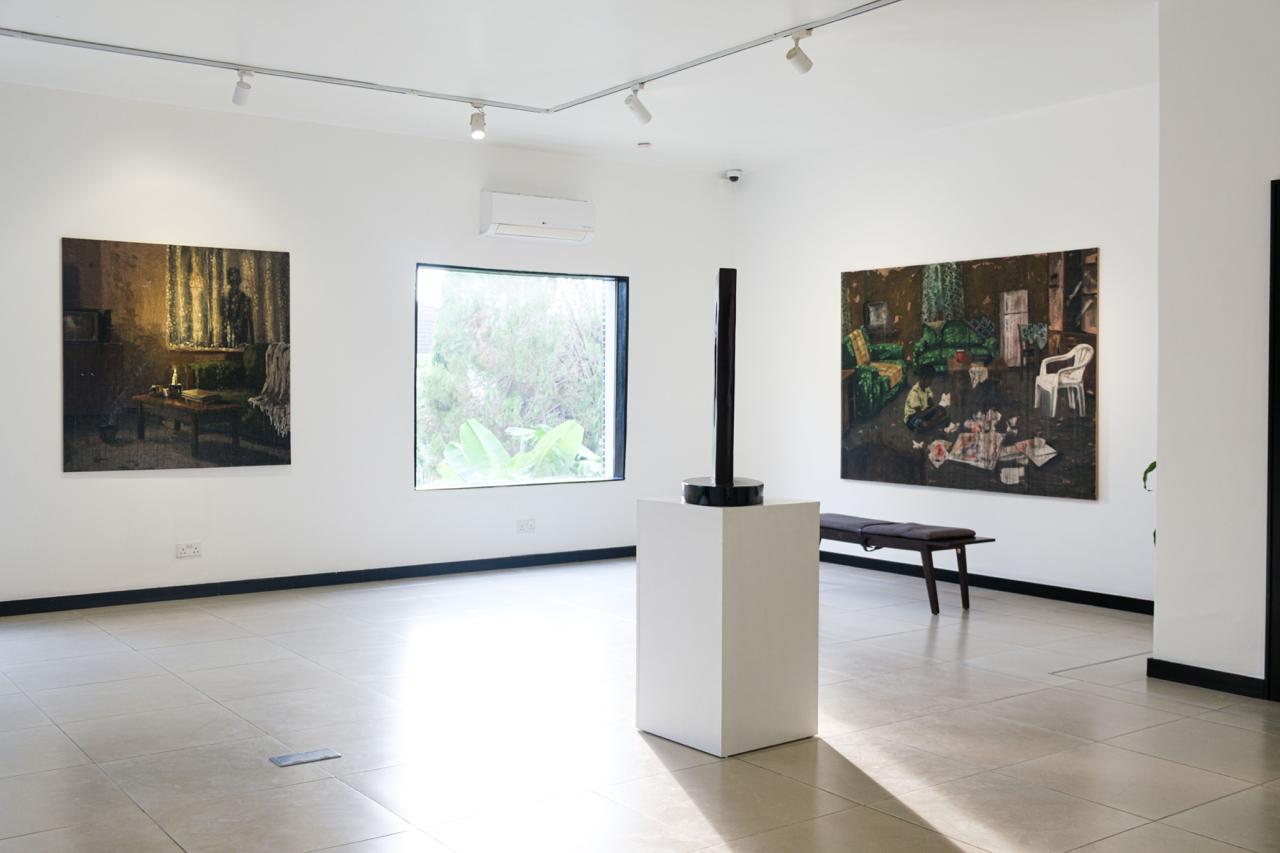
I consider how a work changes when it moves from the artist's studio into a shared exhibition space: how it interacts with the other works, how much space it needs, what the viewer encounters first, and what might happen when someone stands before it.
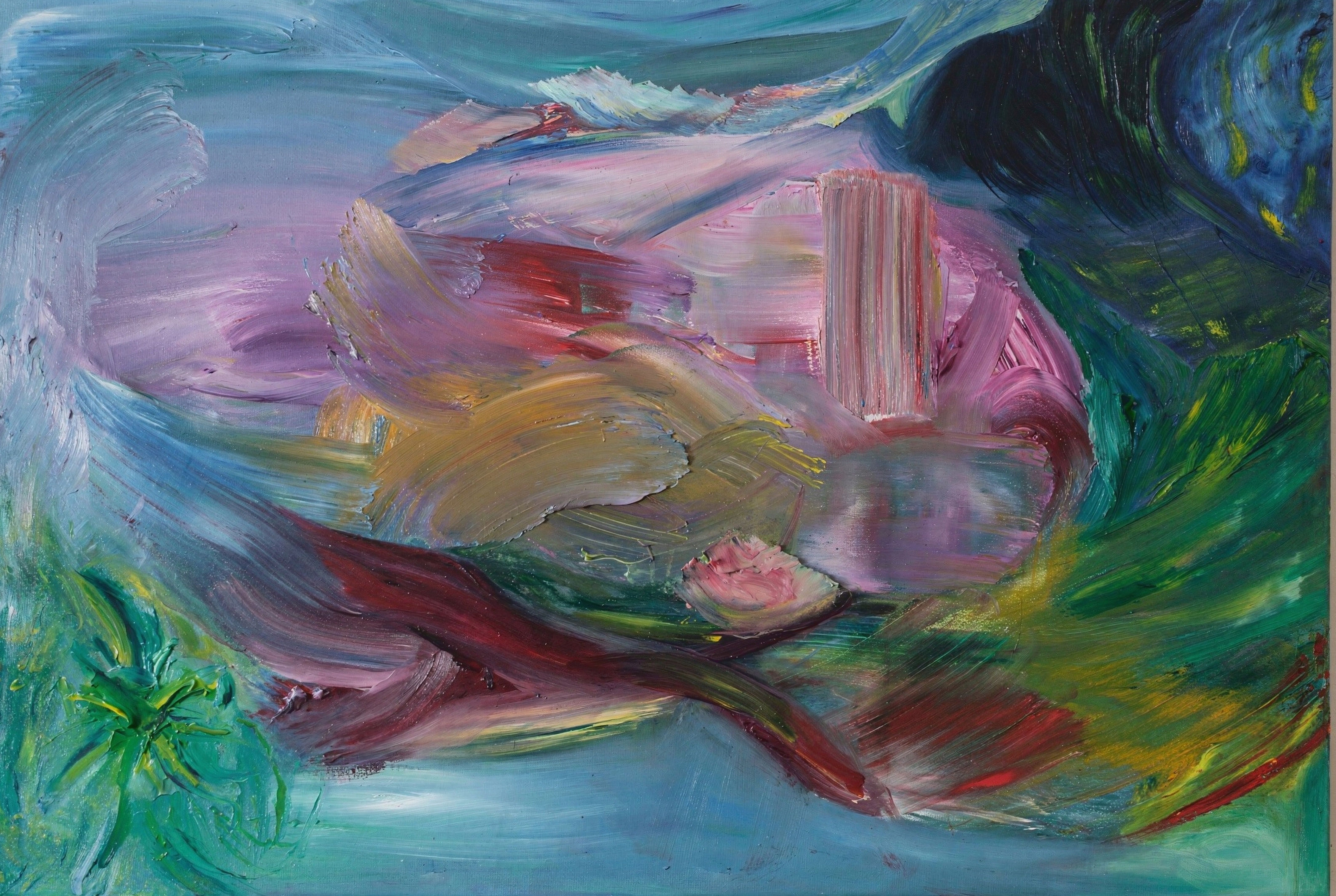
My curatorial statement therefore extends beyond the written text. It informs how I introduce the exhibition and how I engage visitors during gallery tours. I do not want to prescribe what a viewer should think. Rather, I want to offer enough context for them to enter into a conversation with the work while leaving room for their own interpretation.
In that sense, my approach is consistent from artist to audience and that is to protect the integrity of the artist's voice while creating space for the audience to question, feel, interpret or even resist what they encounter.
RA: Your latest curatorial project, The Rooms We Carry, has a masterful mix of artists who used different media forms. How were you able to unify these people and their individual artistic expressions under the overarching theme of the show?
JA: The Rooms We Carry was developed through and with a curatorial team, so the selection and development of the exhibition were not processes that were approached in isolation. From extensive conversations with the artists, I wanted to understand what each artist was exploring and, more importantly, what experiences were sitting behind the works.
Although their practices and media differed, I began to recognise connections between the experiences they were translating through their work. Each artist was, in some way, engaging with a space whether physical, emotional, psychological, spiritual or domestic and with the things that remain with us after we leave those spaces.
That became the thread that allowed the works to exist together without requiring them to speak in the same visual language. I also considered the physical relationship between the works. Each piece needed enough room to breathe so that it could retain its individual voice, while still entering into dialogue with the works around it. The intention, therefore, was not to force different artists into a single interpretation, but to create a conversation between distinct voices while allowing each artist to remain themselves.
RA: Why The Rooms We Carry? How does it fit the description of the show on display, and what was your intent with this title?
JA: The title emerged from listening to the artists.
Through my conversations with them, I began to notice that although their works were very different, many were returning to spaces and experiences that had shaped them in some way. Some of these spaces were physical; others were emotional, psychological, spiritual or rooted in memory.
It made me think about how we do not necessarily leave a room completely when we leave it. Sometimes we leave fragments of ourselves behind, while at other times we carry fragments of that room with us memories, emotions, experiences, relationships or things we are still trying to understand.
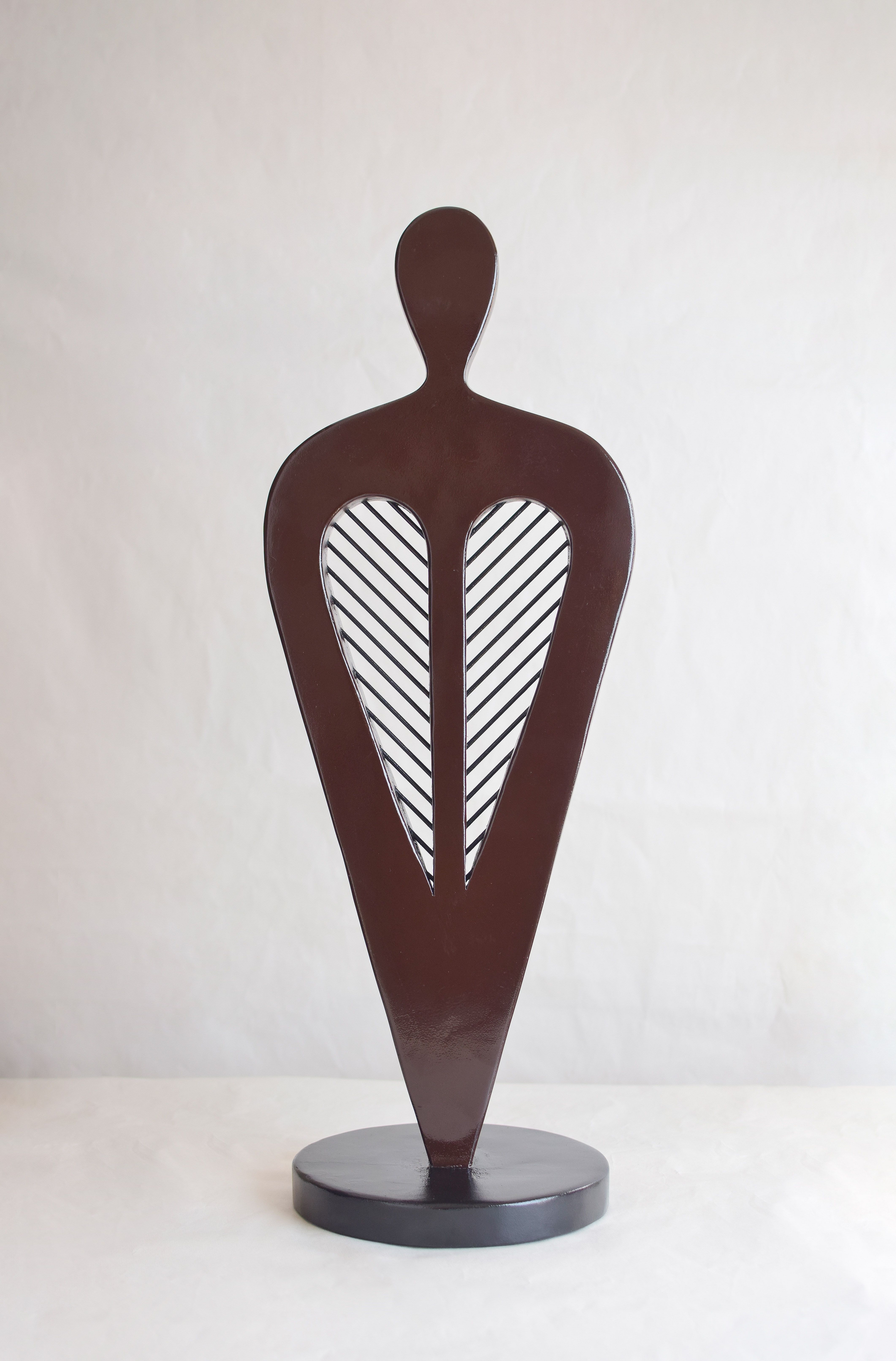
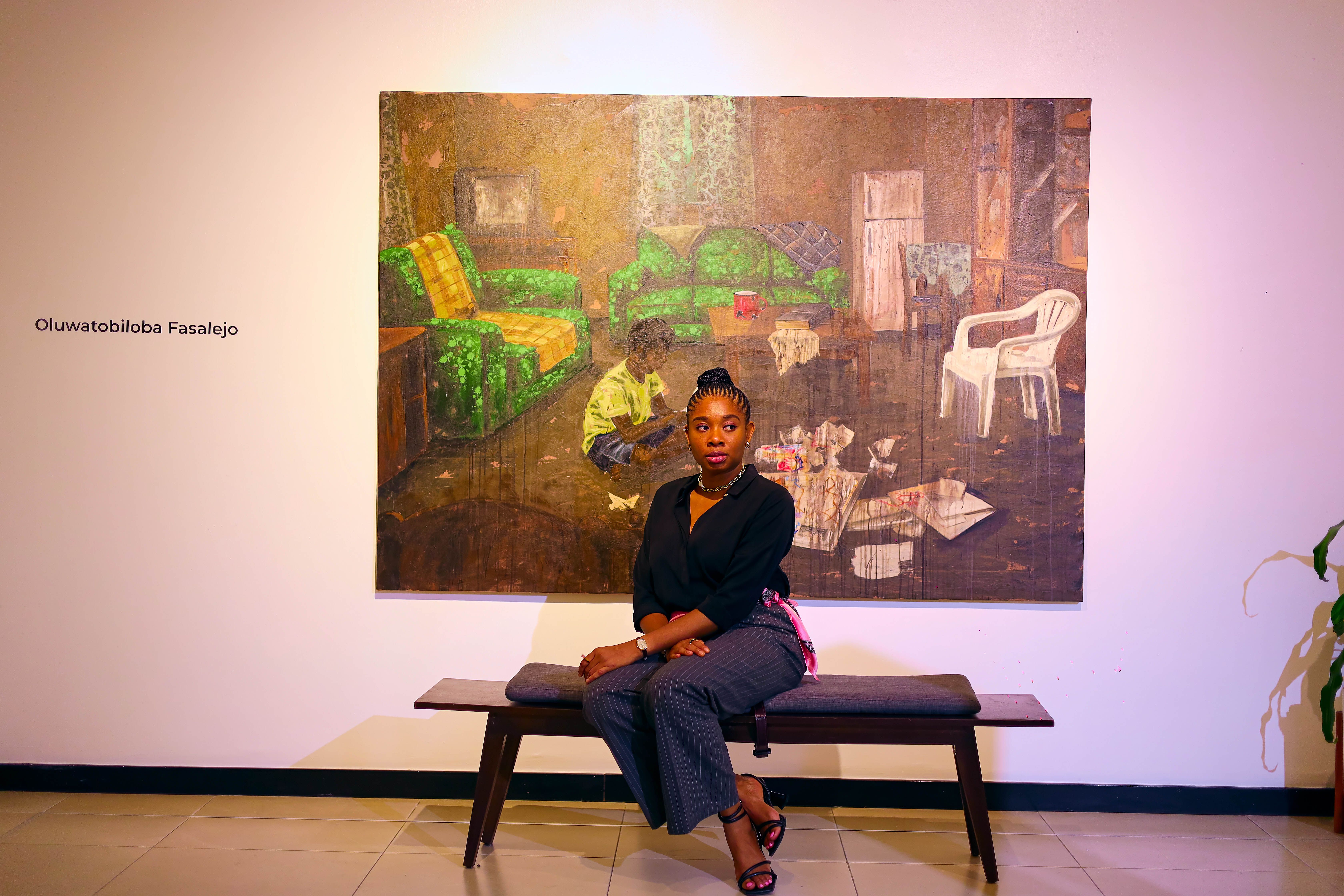
Across the exhibition, these ideas manifest differently. There are works that engage with grief and healing, domestic spaces and family rituals, transformation and self-realisation, and the movement from seeking refuge towards finding peace.
The title became a way of bringing these different experiences into conversation. For me, the “room” is not necessarily a physical room. It can be a period of one's life, a relationship, a memory, a home, a spiritual experience, or even a version of oneself that one has had to leave behind.
I was interested in the question of what exactly we carry when we say we carry rooms and whether those rooms become burdens, sources of comfort, memories, or things we are still learning how to live with.
RA: What do you want viewers to take away from this exhibition?
JA: I do not think I want viewers to leave with one fixed interpretation of the exhibition. My hope is that the exhibition gives them an opportunity to confront, or at least sit with, the different rooms they carry themselves.
It might be a memory, an experience, a relationship, a particular period of their lives, or something they have not necessarily given themselves the time to consider.For me, the takeaway is less about providing an answer and more about creating a moment of reflection.
I want people to sit with what the works bring up for them. If someone leaves questioning something they previously took for granted, remembering something they had forgotten, or simply becoming more aware of what they carry with them, then I believe the exhibition has created a meaningful encounter.
RA: You occupy a unique position as the curator of this ongoing show, and as the gallery manager of Retro Africa. What is the experience like?
JA: Being both the gallery manager and curator has been a unique and eye-opening experience. It gives me the opportunity to encounter an exhibition from multiple perspectives. I am not only thinking about its conceptual or curatorial direction; I am also involved in the practical processes through which that idea becomes an exhibition and is experienced within a real space.
It has taught me that an exhibition is never only the idea itself. There is a great deal of connective work around that idea working with artists, considering audiences, thinking about the space, coordinating different moving parts and ensuring that the intention behind the exhibition can ultimately be experienced by the person who walks into the gallery.
Working directly with artists has also strengthened my understanding of how important communication is to the curatorial process. Overall, I would describe the experience as exciting, constantly evolving and deeply instructive. Each project has taught me something different about artists, audiences, exhibitions and, ultimately, my own developing approach to curatorial work.
RA: Given your current curatorial experience, what do you envisage as your future prospects in the art ecosystem?
JA: I see my future within the art and broader cultural ecosystem as one of continued growth and development. My experience so far has allowed me to work across curation, creative production and collaboration, and I am interested in continuing to develop these areas while remaining rooted in the art ecosystem.
More than defining my future by a particular title or position, I am interested in continuing to deepen my understanding of how artistic and cultural ideas are developed, presented and experienced. I see my current curatorial experience as the beginning of a practice that will continue to evolve through working with artists, exhibitions and cultural projects and different forms of creative expression.
The Rooms We Carry opened on June 19, and is currently on show at Retro Africa until September 20, 2026.