Where is Dadiyata? In Conversation with Oludamilare Kolawale and Aisha K. Mohammed
Oludamilare Kolawale and Aisha Kabiru Mohammed revive the discussion about Dadiyata’s disappearance at Gatefield, Abuja.
Rejoice Anodo
Chief Editor
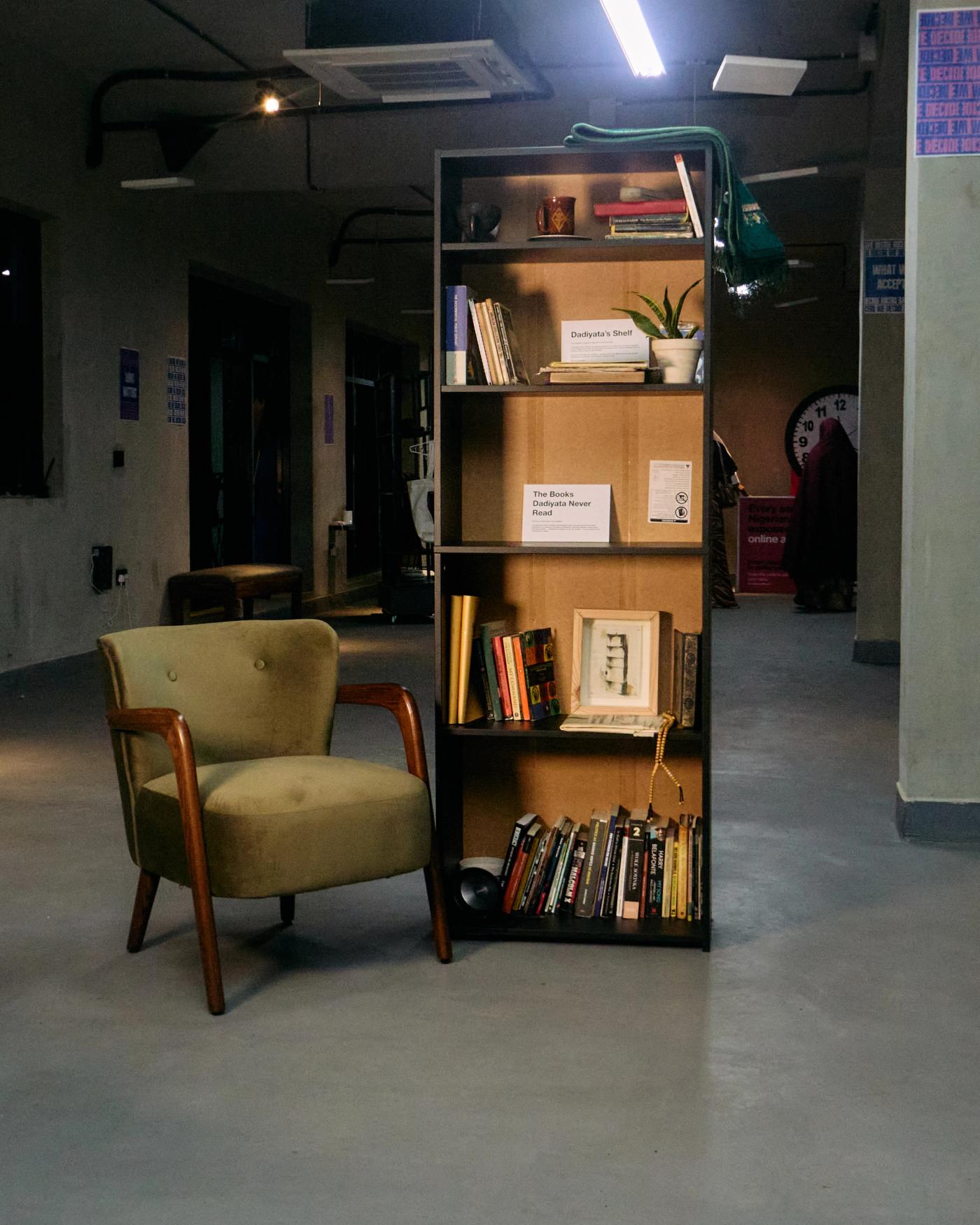
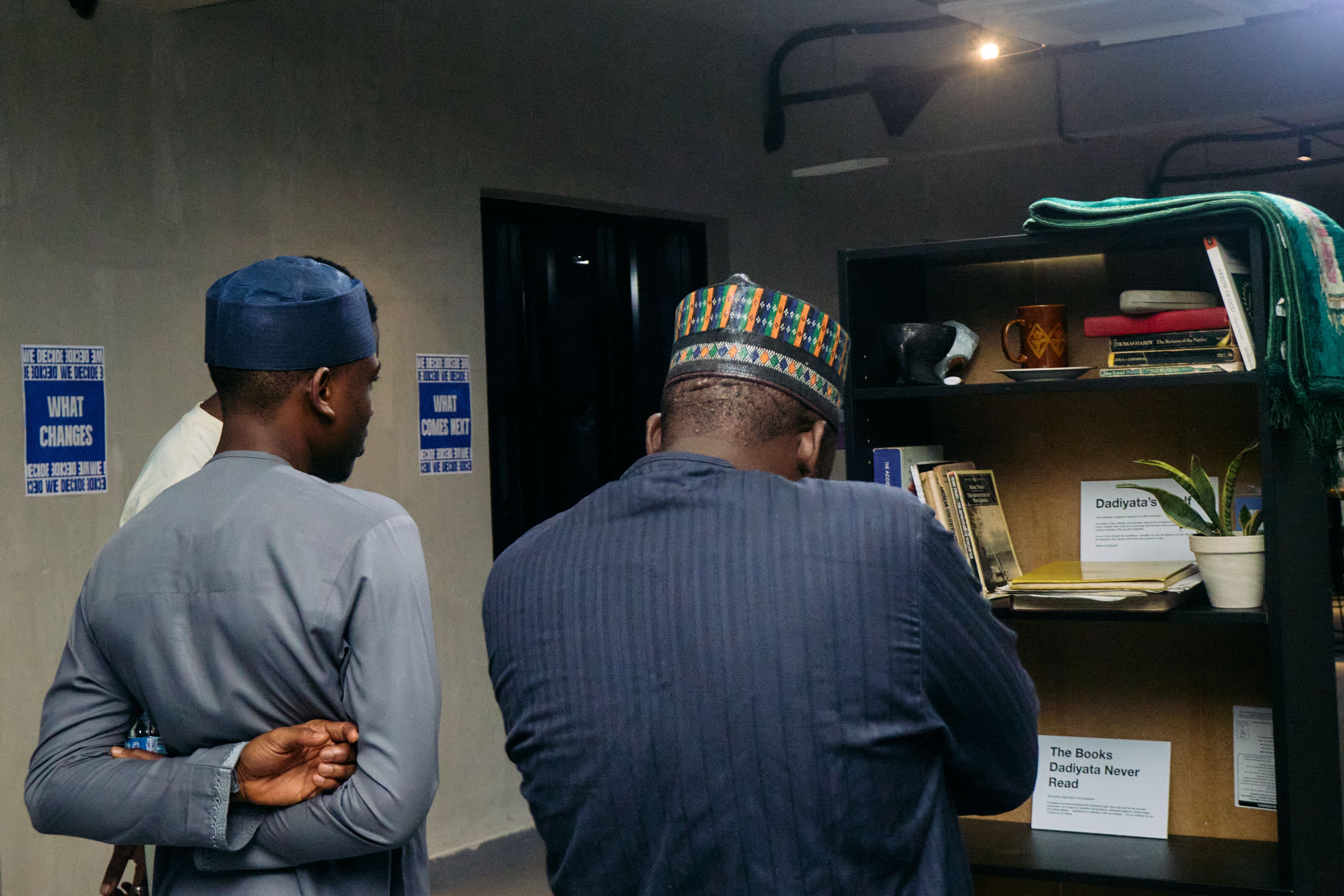
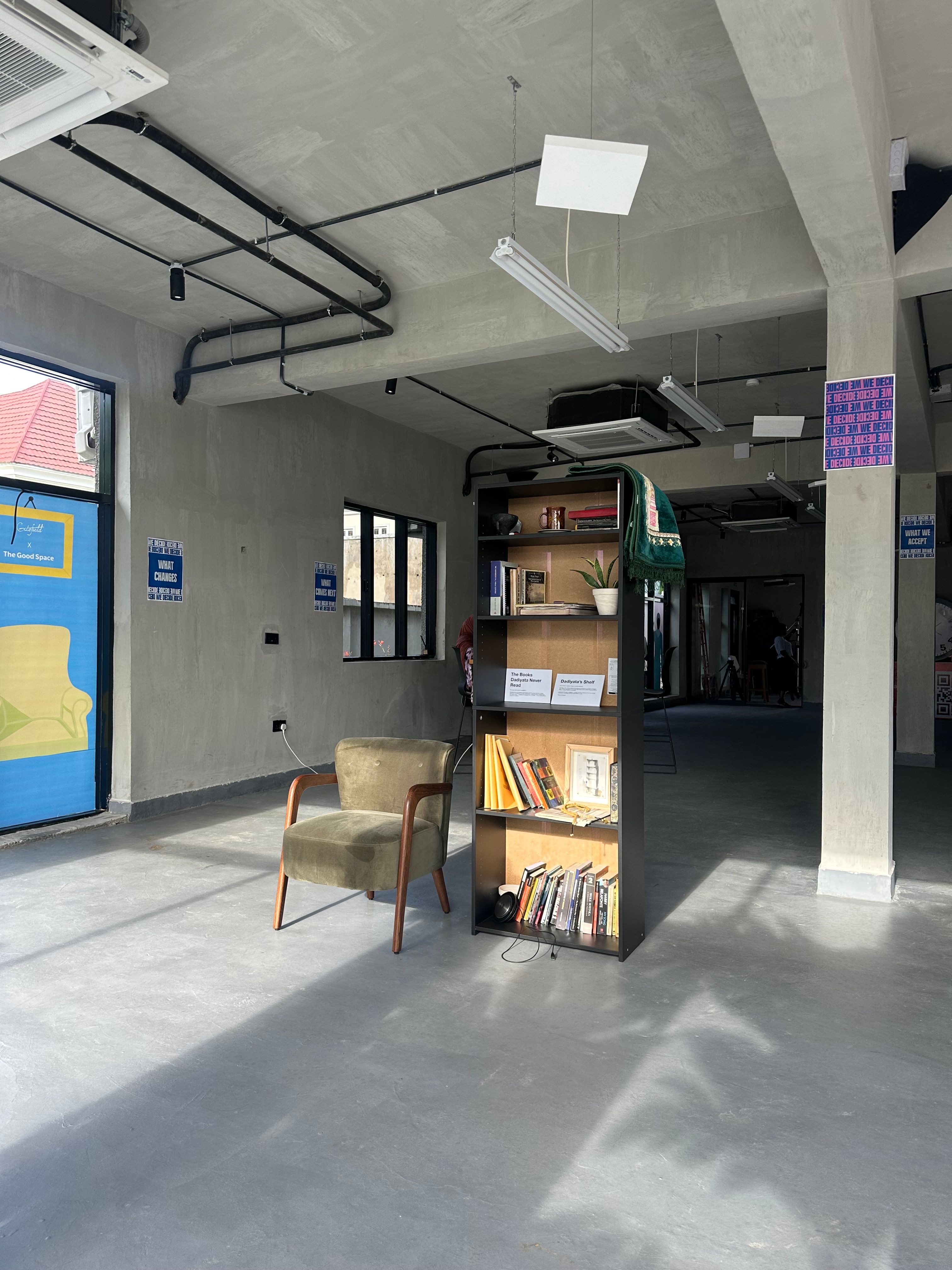
I am standing in front of an open bookshelf, placed next to a reading chair. It has a prayer mat placed on the top. There is a natural progression of light dragging across the book placements, casting a bright overcast on the lowest shelf bearing the largest amount of books. Amongst the books, there is a prayer bead, a potted plant, a glass case, a sheaf of old-looking documents, a ceramic cup with its accompanying saucer, and two electric devices. These, with an exception of the arm chair, book shelf and prayer mat, are Abubakar’s personal belongings, which he left behind in the wake of his abduction and unsolved disappearance.
Abubakar Idris, also known as Dadiyata, was a university lecturer at the Federal University, Dustin-Ma, Kastina. He was a vocal critic of the Kano State government under Abdullahi Umar Ganduje’s administration in 2019 on social media. On the evening hours of August 1 2019, upon driving into his residence in Barnawa, a suburb of Kaduna State, he was ambushed by unidentified armed men who forced him back into his car and sped off. Since then, he has been missing for seven years, and now officially declared dead by Nigerian law, in accordance with Section 164 Nigerian Evidence Act 2011, titled “Presumption of death from seven years absence and other facts”.
Dadiyata’s disappearance has invoked advocacy outreach by human rights groups, legal practitioners and his family, seeking for renewed official investigation, accountability and justice. Among these flagwavers for the cause, Goethe-Institut Nigeria, in collaboration with Gatefield, BL Brand, Iwalewa Books and Open Arts Development Foundation set up a nomadic multi-disciplinary installation project across three cities to provide a renewed spotlight on Abubakar Idris’ life trajectory, memory and disappearance.
In this piece, Oludamilare Kolawale (programme manager at Goethe-Institut) and Aisha Kabiru Mohammed (lawyer, civic rights advocate, and participant of the Goethe-Institut Art and Country Initiative 2026), share their thoughts as co-curators for Where is Dadiyata?
Rejoice Anodo: Abubakar Idris has been missing for seven years. That is a long time for a missing person's case to stay unresolved. What prompted the decision to switch the question, Where is Dadiyata? into an exhibition rather than a campaign, a protest, or even a report?
Oludamilare Kolawale and Aisha Kabiru Mohammed: Perhaps the important distinction is that we did not want to turn Where is Dadiyata? into another campaign. The question has existed in Nigerian public consciousness for seven years.
It has been a hashtag, a demand, a headline, an appeal to the government and a question repeatedly asked by family, friends, journalists, and civil society. We became interested in something slightly different: what happens to a question when it remains unanswered for seven years? And what happens to the society that has had to live with that unanswered question?
That is where art became important to us. A report can document what happened. A campaign can demand action. A protest can mobilise people. But an exhibition can create a space in which someone has to remain with an absence.
The project therefore gradually moved from commissioned writing into installation, graphic work, fashion, music and public programming. We wanted to create different ways of encountering disappearance, not simply as information, but as something that alters ordinary life.
That is why the chair matters. The books matter. The cup matters. The unfinished academic work matters. They bring us back to something very simple: before Dadiyata became a political case, he was a person living an ordinary life.
RA: Was the exhibition set up to provide an answer to the question Where is Dadiyata? Or was it to spread information about the incident? If not, what did you want a visitor to leave the show with?
OK & AKM: The exhibition cannot answer the question Where is Dadiyata? If we could answer it, there would probably be no reason for the exhibition to exist.
Neither did we want to build an exhibition whose primary function was simply to transmit information about the case. Information is available. What has been missing is an answer. We wanted visitors to leave with the weight of the question. There is another question beneath it: what does such disappearance do to the people and society that remain?
We often think of traumatic political events as things that happen and then pass. But do they really pass? Or do they leave residues—fear, silence, accommodation, distrust—that gradually determine how a society behaves?
Dadiyata disappeared, but everyone else had to continue living. That interests us enormously. So perhaps the visitor should leave not only asking Where is Dadiyata?, but also: What has seven years of not knowing done to us?
RA: Dadiyata was a scholar and government critic whose main mode of information dissemination was social media. How did his identity shape the artistic language of the exhibition and the specific items put on display: the installation, wearables, and publication?
OK & AKM: One of our strongest curatorial decisions was not to reduce Dadiyata to the moment of his disappearance. If the exhibition contained only photographs of him, newspaper reports and accounts of the abduction, we risked allowing the violence committed against him to become his entire identity.
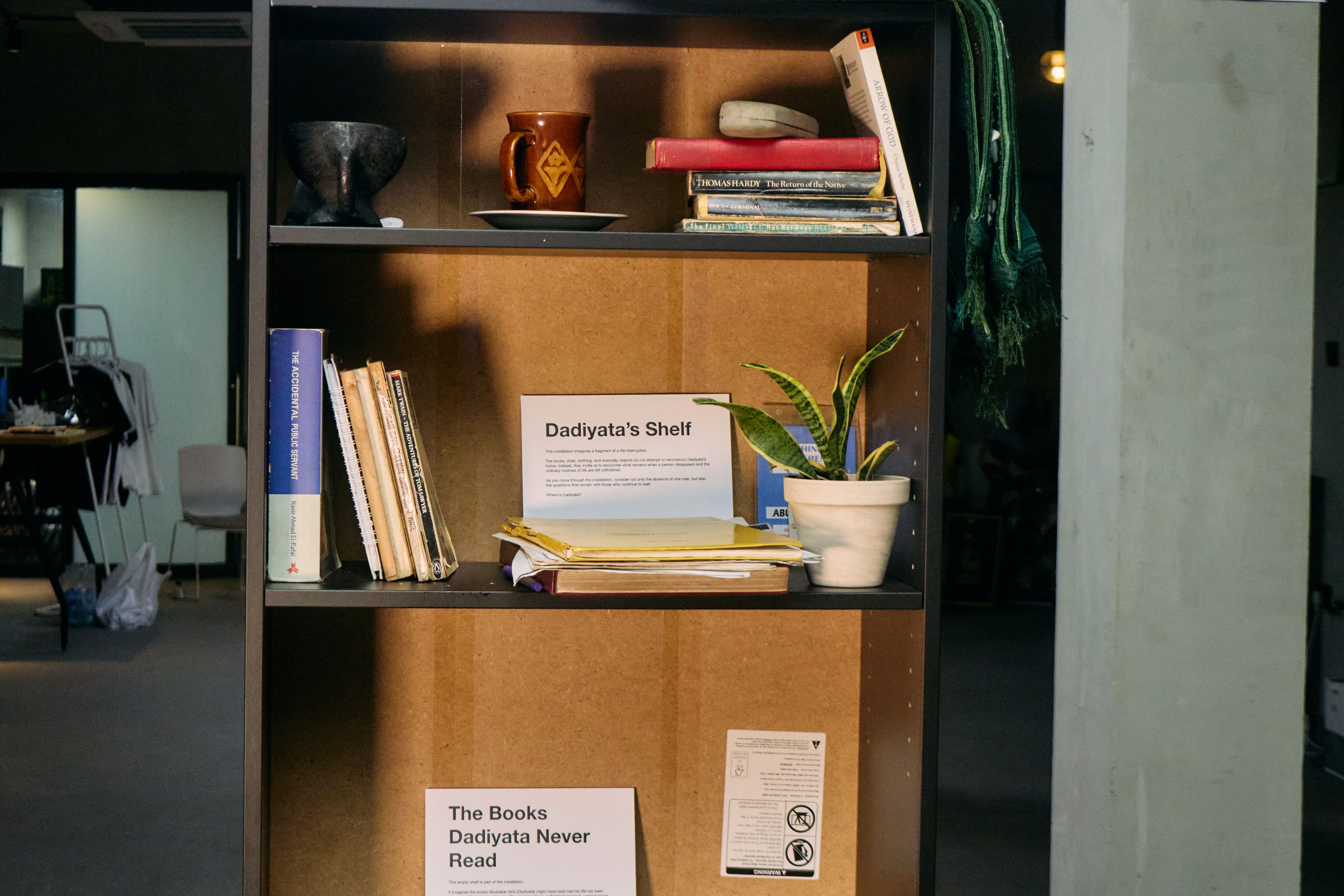
Working with his family became extremely important because they gave us access to traces of the person who existed before the case. His undergraduate project is titled Social Media and Social Revolution. His MSc dissertation examines the Facebook page of a Nigerian presidential candidate. His doctoral research proposal considers internet memes as political communication in Nigeria and Malaysia. There are lecture notes, attendance sheets, reading glasses, a conference name tag, a coffee mug and books.
Suddenly we encounter a scholar, teacher, reader and thinker. The publication extends this through commissioned poetry, essays and visual responses. The wearables allow the question to leave the exhibition space and circulate on bodies and through everyday life. The installation brings all these forms together around something quieter: interrupted routine.
RA: Dadiyata is an indigene of Kano State. However, he was resident in Kaduna at the time of his abduction. Is this sequencing of the show’s locations symbolic or practical?
OK & AKM: The exhibition did not begin in Kaduna. The journey is: Abuja → Kaduna → Lagos.
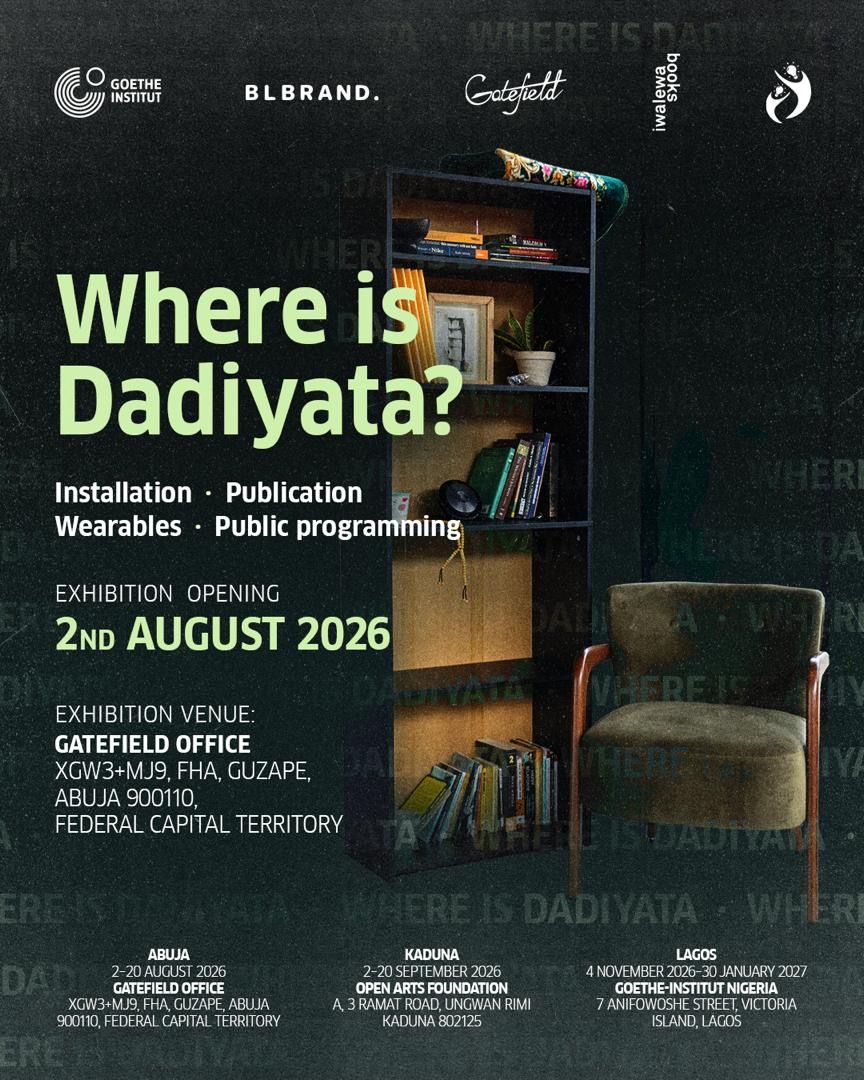
Where Is Dadiyata? opened in Abuja on 2 August 2026, exactly seven years to the day after Abubakar Idris Dadiyata disappeared. It travels to Kaduna in September and concludes in Lagos in November.
The decision to begin on 2 August, and particularly in Abuja, is central to the curatorial thinking of the project. Seven years is not only an emotional or commemorative marker in this case. It also represents a significant threshold within Nigerian law. Under Section 164(1) of the Evidence Act 2011, a person who has not been heard from for seven years by those who would naturally have heard from them if they were alive may be presumed dead. So on 2 August 2026, we arrived at a strange intersection between law and memory. The law makes it possible to presume death. But there is still no answer to the question: Where is Dadiyata?
The exhibition is, in part, a response to this contradiction. What does it mean for a society to arrive at the legal possibility of closure when the fundamental circumstances of a person's disappearance remain unresolved? This thinking also informs one of the central visual propositions of the installation: the relationship between the coffin and the shelf. A coffin and a shelf can be constructed from essentially the same material: wood, but they propose radically different relationships to memory.
A coffin can be closed. It can be lowered into the ground. It enables burial and symbolically at least, the possibility of closure. A shelf does something different. A shelf remains open. It holds things. It receives things. Things can be removed from it and new things can be added. It remains available to memory, encounter and continuation. This is why we chose the shelf rather than the coffin. At precisely the moment when the law allows Dadiyata to be presumed dead, the exhibition refuses to perform a symbolic burial of the question. The shelf becomes our counter-image to the coffin. One closes. The other remains open.
And Where Is Dadiyata? deliberately remains open.
Beginning the exhibition in Abuja therefore places this question within Nigeria's political capital and close to the institutional structures of the state. It asks what it means for a citizen to disappear and, seven years later, for the state and society to still be unable to provide an answer. From Abuja, the exhibition travels to Kaduna, which carries a completely different intimacy. Kaduna is where Dadiyata lived, worked and disappeared. There, the exhibition encounters people who may remember not simply the case of Dadiyata, but the person himself.
It then travels to Lagos, where the question enters another cultural and public context and where the accumulated experiences of Abuja and Kaduna become part of the exhibition's final presentation. So the route is partly geographical, but it is also conceptual: Abuja confronts the question with the state. Kaduna returns the question to the place of disappearance. Lagos carries the question into a wider cultural and public conversation. And throughout that journey, the shelf remains open.
Because although seven years may permit a legal presumption of death, it does not provide an answer. We are resisting the closure and burial of the question itself: Where is Dadiyata?
RA: Does the programming and tone of the exhibition change as it moves across cities?
OK & AKM: Yes, but the installation and its central curatorial proposition remain consistent. What changes is the public programme around it.
Abuja opened the exhibition and introduced the project publicly, including poetry as part of the opening encounter. Kaduna will include a performative programme and engagement with local audiences. Lagos will create a stronger discursive moment through conversations and other public programming.
We are interested in allowing each city to speak back to the project rather than simply reproducing an identical event three times. The question remains the same. The people encountering it change.
RA: Lagos is the final stop. Is it being treated as the show's biggest stage or the most important one? What do you expect the Lagos audience to learn from the show?:
OK & AKM: Lagos will be more elaborate, but we would resist calling it the most important presentation. Kaduna carries a significance Lagos cannot reproduce because it is where Dadiyata lived and where he disappeared. Abuja has another significance because it is the country's political capital.
Lagos is important because it is where the journey accumulates. By November, the exhibition will carry traces of Abuja and Kaduna with it. There will have been conversations, encounters, documentation and responses from audiences in those cities. We also intend Lagos to be an important moment for Dadiyata's family within the project.
So rather than thinking of Lagos as the biggest stage, we think of it as the point at which the exhibition arrives carrying everything it has gathered along the way.
RA: Has Dadiyata's family seen the exhibition? If yes, what was the reaction?
OK & AKM: The family has been closely involved in the development of the project, although we deliberately did not ask them to attend the Abuja opening. We have been in conversation with them about the project's direction, and many of the personal materials within the installation were generously loaned by the family. There is a formal loan agreement governing these objects, as well as a memorandum establishing our relationship with them.
We intend to invite and host the family for the Lagos presentation. That decision was deliberate. By Lagos, the exhibition would have travelled through two cities and gathered a wider public conversation around it. We felt that would provide a more appropriate moment for the family to encounter the project publicly.
RA: Is the installation an exact replica of Dadiyata’s study?
AKM: No, it is not. We attempted to capture what remains when a person is taken, or disappears abruptly. The best way for us to do this was with this shelf and the chair; to represent everyday life that has been ground to a halt. Although Dadiyata’s personal items appear on the shelf, the entire installation is a enactment of what his reading space looked like. The chair, shelf, and prayer mat are our additions to the installation.
RA: This exhibition will provide public attention to Dadiyata’s disappearance. In realistic terms, what can this offer his family that still does not know what happened to him?
OK & AKM: We have to be careful not to exaggerate what an art project can do. An exhibition cannot return Dadiyata to his family. It cannot conduct a police investigation. It cannot prosecute anyone. It cannot provide the answer that the family deserves.
What it can resist is social disappearance following physical disappearance. There is a second disappearance that can happen when a society stops asking, when a name gradually becomes an old headline and when unresolved violence is absorbed into everyday life.
Art can intervene there. It can keep a name within public memory. It can bring new people into the conversation. It can preserve materials. It can create an archive. It can insist that an unresolved question remains unresolved even when society has become accustomed to it. That may appear modest, but memory itself can be a form of civic resistance.
RA: Is there a possibility that a lengthy exhibition such as this will turn his family's unresolved grief into a public spectacle?
OK & AKM: Absolutely. And acknowledging that danger has been fundamental to how we have approached the project. There is always an ethical risk when private grief enters a public cultural space. This is why our relationship with the family has not been extractive. We met with them, explained the project, formalised how personal objects would be borrowed and returned, and continued communicating as the project developed.
We also deliberately avoid sensationalising the disappearance. The installation is quiet. There is no reconstruction of the abduction. There are no dramatic images of violence. The empty chair is not theatrical scenery. The shelf contains the traces of an ordinary intellectual and domestic life. Our responsibility is to create proximity without turning pain into spectacle.
RA: If the exhibition closes in Lagos without new answers surfacing, would you consider it a success? What would success mean?
OK & AKM: If success meant discovering where Dadiyata is, then it would be dishonest for an art exhibition to claim that responsibility.
We measure success differently. Did someone encounter Dadiyata as more than an old news story? Did someone who had stopped asking begin asking again? Did the project preserve something that might otherwise disappear? Did it create a space in which disappearance could be discussed alongside memory, political violence, social justice and civic responsibility? And importantly, does something remain after the exhibition? Our intention is that something does.
The exhibition may end, but Dadiyata's Shelf is conceived to continue as a permanent presence within the Goethe-Institut Nigeria Library: a place containing books around social justice, memory, political thought and related questions, which can periodically be activated through readings and conversations.
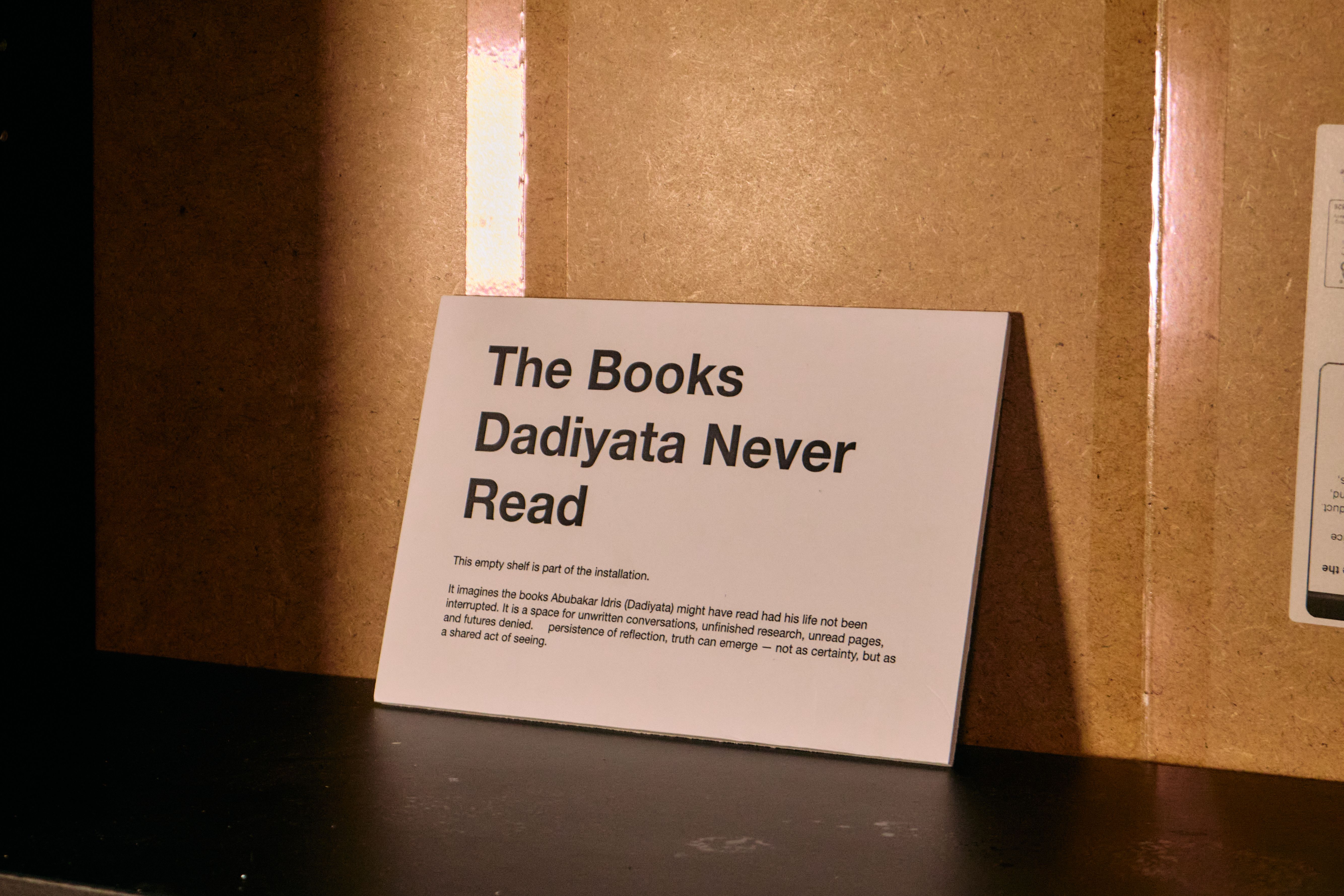
There is one deliberately empty section: The Books Dadiyata Never Read. For us, that empty space perhaps says more about success than any claim to closure. The project succeeds if the archive remains open and the question remains socially alive.
RA: Goethe-Institut's Art and Country Initiative set up this exhibition. What made this case a right fit for the organisation, as opposed to a conventional panel discussion or literary programme?
OK: The Art & Country Initiative is interested in the relationship between artistic practice and the social and political conditions within which people live.
Where Is Dadiyata? emerged precisely at that intersection. The initial idea was actually much closer to a literary project. We commissioned writers—poets, essayists and journalists—to respond to the provocation Where is Dadiyata? But the project kept exceeding the page. It became clear that disappearance is spatial. There is a place where someone should be and is not. There are objects waiting for their owner. There are routines that suddenly stop.
That demanded installation. Then graphic artists responded. Fashion designers responded. Music entered my own curatorial process through a playlist assembled over several months. Public programmes emerged. The form expanded because the question demanded more than one artistic language. That is precisely why it belongs within Art & Country: art is not being used simply to illustrate a political issue. Artistic practice becomes a method for thinking through what the issue has done to our social reality.
RA: Gatefield Foundation, Iwalewabooks and BLBrand are recognised as collaborative partners. What did each specifically bring to the table?
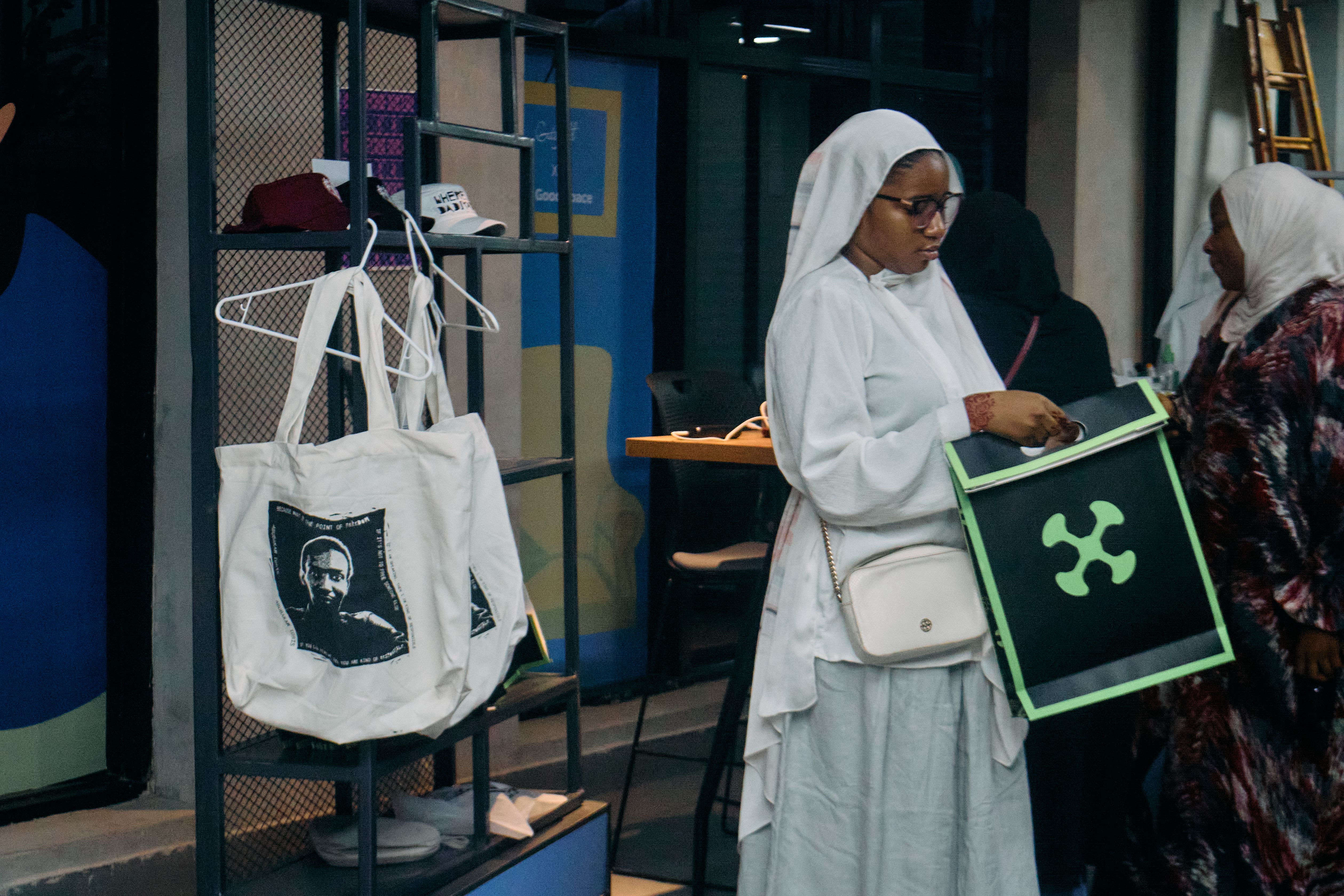
OK: Each partnership corresponds to a different dimension of the project. Gatefield has been important to the project's public presentation and engagement, including hosting the Abuja exhibition and helping situate the project within a broader civic conversation. Iwalewabooks connects strongly to the literary and publishing dimension of the project. The publication is not supplementary to the exhibition; it is one of its central artistic forms, bringing together commissioned writing and visual contributions around the question. BLBrand developed the wearable dimension of the project. This was important because we wanted the question to leave the exhibition space. A T-shirt, cap or tote carrying an artwork or phrase becomes a moving surface through which the question circulates in public. There is also an economic dimension to this collaboration: proceeds from sales of the wearables are directed to Dadiyata's family. For the Kaduna presentation, Open Arts Foundation also joins the project as a local partner, hosting the exhibition and collaborating on its public programme.
RA: Dadiyata's disappearance is a politically sensitive subject, thus, institutional support can lend legitimacy to this project. How did you navigate the exhibition setup without external influence?
OK: For me, the important thing was establishing a strong curatorial structure early enough that the project could resist being pulled in different directions. Political sensitivity can create pressure from several sides. There can be pressure to make a project more activist, more cautious, more accusatory, more emotional or more explanatory.
We tried to resist all of those simplifications. We returned repeatedly to the same curatorial question: What does disappearance leave behind? That gave us a framework for deciding what belonged and what did not. It is also why I became extremely protective of the installation as we approached the opening.
Once the work had found its language; the empty chair, the shelf, the books, the manuscripts, the personal objects, the empty compartment, I did not want additional symbols introduced simply because they might make the message more immediately legible. Ambiguity is not the same as political neutrality. Sometimes refusing to tell an audience exactly what to feel creates a more demanding political encounter.
RA: As someone with experience with Nigeria's legal system and the activism space, what do you think an art exhibition can do that seven years of advocacy, press releases and legal aid have not?
AKM: In my experience as a lawyer who has worked in activism and also in cultural programming, the thing with art exhibitions is that they speak directly to the audience's emotions. A person looks at a piece or an installation and immediately gets a sense of what the artist is feeling and thinking. For this installation, we have Dadiyata’s personal items. People aren't just looking at dates, press releases, or a distant story—Dadiyata becomes a real person when you look at the installation. We see the books he read, the cup he drank out of, and his ID card. Press releases, protests, reports, and even legal aid can carry a certain coldness. There's a detachment to those processes because courts and formal statements are built to be sympathetic rather than empathetic. That's the difference between art and the legal or activism spaces. Activism evokes emotion, but art forces you to empathise with the subject. It forces you to put yourself in that person's shoes whether you want to or not. In activism, a case remains objective. With art, you are forced to see the subject not as another statistic, but as a person you could have been. This installation evokes those emotions, and people need to hold onto Dadiyata’s memory. Even though the law presumes him dead after seven years, we still need these conversations to keep his memory alive—otherwise, those seven years of legal aid will be for nothing. Where activism, protests, and legal processes can feel bureaucratic, this installation forces people to see Dadiyata as a human being, not just a name on a banner or a file in a court case.
RA: Is there a legal investigation about Dadiyata still open? If yes, does this exhibition connect to it, or is there an intentional separation?
AKM: There have been reports of fresh investigative attention following new allegations. However, Where Is Dadiyata? is intentionally independent of any police or legal investigation. We are not investigators, and the exhibition does not claim to establish culpability or adjudicate competing allegations.
Where factual developments form part of the public history of the disappearance, they can enter the project's timeline as documented developments. But the artistic project occupies a different space. Our concern is what seven years of unresolved disappearance means, for memory, for the family, for civic life and for a society that continues to live alongside unanswered political violence.
RA: What responsibility do you feel towards getting the facts of this case right in an artistic space where ambiguity is welcomed and interpretation is often left for viewers?
AKM: I feel a responsibility to present the facts as clearly as possible, but it’s important to distinguish between factual ambiguity and artistic ambiguity. To me, the facts are clear and unambiguous: seven years ago, he was taken from his home, and under Section 164 of the Evidence Act, he is presumed dead. These facts are set in stone.
The installation itself, however, remains open to interpretation, in the way his belongings are arranged and how the space is constructed. Viewers can engage with the setup and draw their own meaning from the message we're conveying, but that doesn't alter or obscure the underlying reality. His personal items are there, he was taken at a specific time, and he has been missing for seven years. My role is to ensure those facts remain sharp and indisputable so they never get lost in the artistic interpretation of the piece.
Where is Dadiyata? was on display at the Gatefield Office, FHA, Guzape, FCT-Abuja from August 2 - 20. It is scheduled to show in Kaduna from September 2 - 20 at the Open Arts Foundation, and conclude in Lagos at Goethe-Institut Nigeria from November 4 - January 30, 2027.